
Polaris
Google Polaris is a project made from participating in SFU Surge's SparkJam, A week long design hackathon. Polaris is a creation tool, built inside Google Maps and powered by Gemini, designed so that anyone can go from scattered inspiration to a fully crafted, personalized travel itinerary.
Product Design Lead
Daisy Han, Maddisen Ching
Figma
February 2025
Context
Project Overview
My team and I chose Google Maps for the app we had to base our feature on due to how often we use it when planning trips with friends and family. We related with each other on how we would always check in our social medias for places to go, or popular places nearby. We want to take these "saves" and turn them into something more tangible and usable.

Challenges
Primary Challenge

Secondary Challenge
Midway, we realized our feature was more of a curation tool rather than a creation tool. We had to figure out a way where we can balance both, and communicate it clearly to our prospective users.
Ideation
How we wanted to stand out
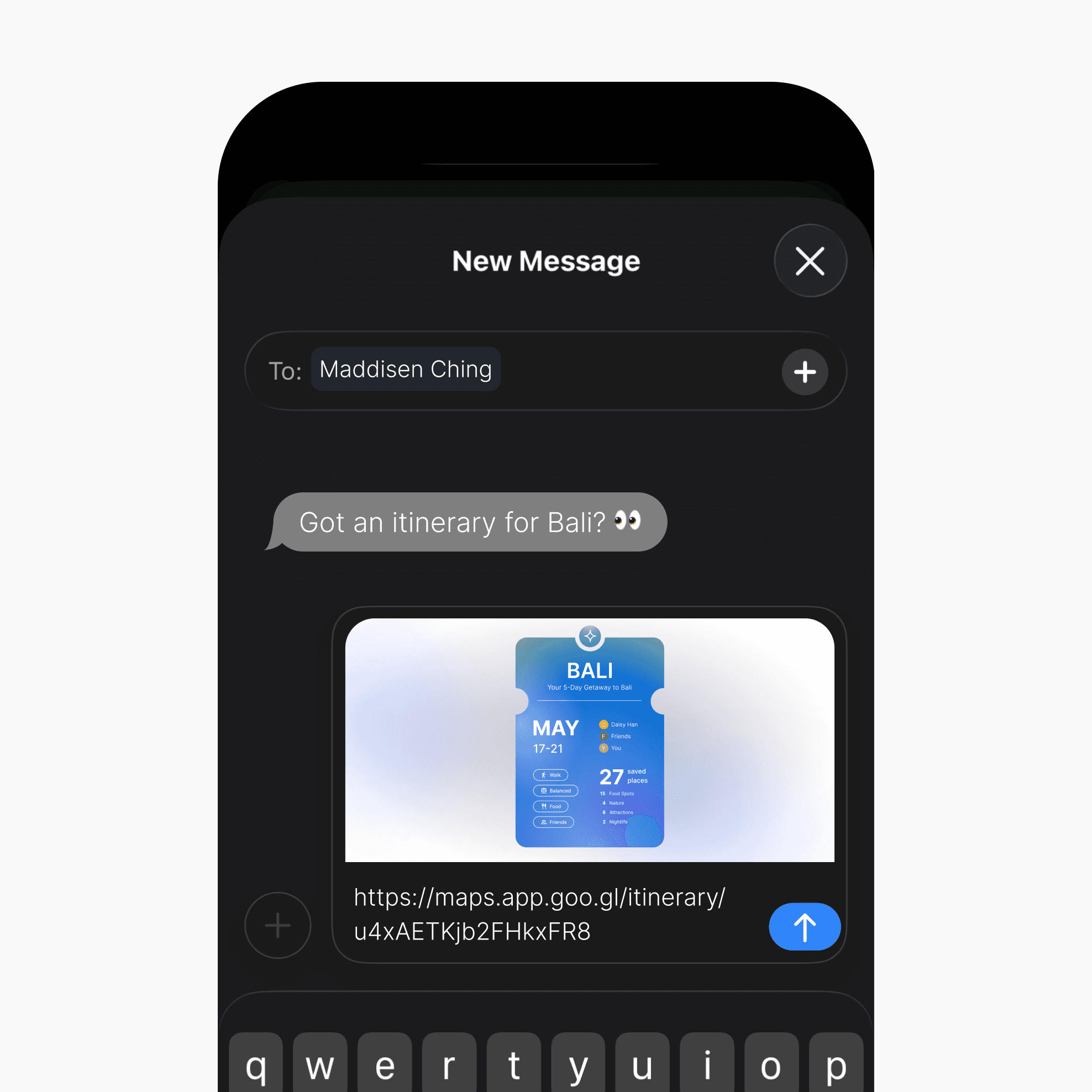
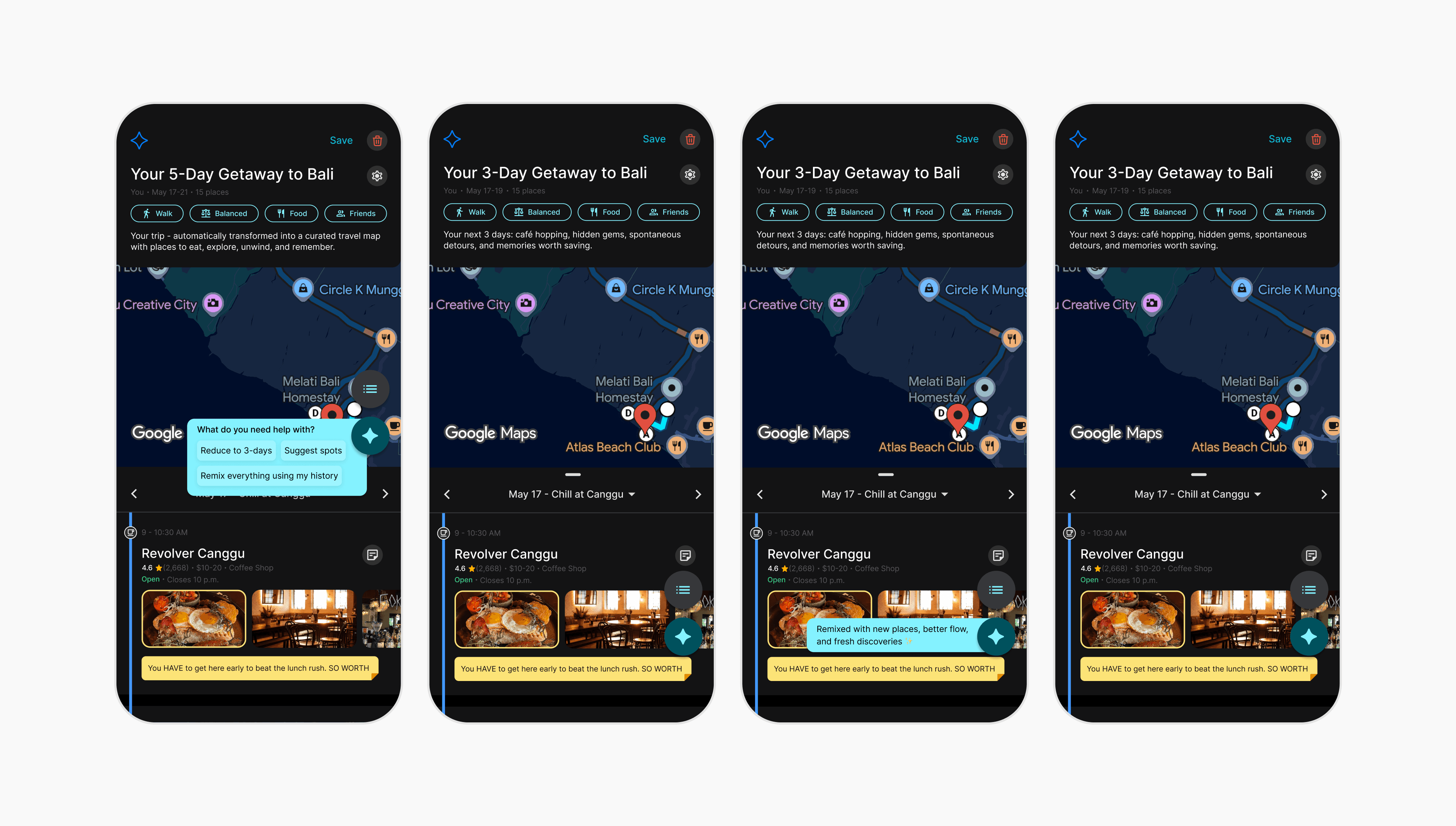
Polaris is a Gemini-powered creation tool built inside Google Maps. It helps users transform scattered inspiration into a personalized itinerary, then package the result as something social and shareable. The concept combined planning, remixing, community input, and a boarding-pass artifact that made the final trip feel created rather than merely saved.
The biggest constraint was creating something expressive within Google’s established design language. We reviewed components across several Google products to find patterns we could reuse or responsibly adapt. The team also debated whether the MVP needed two separate creation flows. Because the flows shared the same inputs and decisions, we combined them into one clearer journey.

Solution
What worked and didn't work
The community layer, remix behavior, and boarding pass were the strongest parts in prototype feedback. People responded to having an artifact they could share, which gave the planning process a sense of completion and identity.
The concept was feasible, but the central planning solution remained close to tools other travel products already offered. In retrospect, the project sometimes behaved more like a curation system than a true creation tool. That tension became the most valuable critique: adding generative AI does not automatically make an experience creatively distinct.

Impact
Future Implementation Ideas
A scrapbook linked to tickets, with stickers, scribbles, and personal media.
An explore surface for discovering media and saving it directly to a place or list.
Itinerary creation from saved YouTube travel content.
Deeper focus on remixable travel artifacts to make creation—not aggregation—the core value.
Reflection
What is the current AI standard?
Polaris strengthened my ability to move quickly inside an existing ecosystem, but it also sharpened my standard for AI features. A product should not stop at making an existing task faster; the feature needs a point of view about what users can create that was difficult or impossible before.

Let’s work together.
dhrishtyd@gmail.com